Behealth | 1st NewsLetter
Dear professional colleagues active in the area of nursing vocational education and training and work-based learning.
We want to briefly inform you about a multinational 24-month Erasmus+ project that started in September 2024. The main objective of the Promoting Quality Assurance in Nursing VET Education (BEHEALTH) project is to improve Quality Assurance (QA) provision and practices of Vocational Education and Training (VET) and Work Based Learning (WBL) in the nursing field through the promotion of self-evaluation and action planning. The project aspires to provide the target group with innovative 360 control tools integrated into a novel Intelligent Mentoring tool, enabling them to assess their QA policy in line with EU standards and be guided toward tailored action planning for improvement with the active involvement of all stakeholders.
At this project stage, we are finalizing an overview of quality assurance practices and frameworks used in the countries represented by the participating organizations, namely Slovakia, Hungary, Cyprus, Türkiye, Greece, and Ireland.
In the new era of quality, Health 5.0 and the associated risks, we are preparing healthcare professionals for the need to be part of an integrated, coordinated, people-centred health system supported by a health education system and an improved Quality Assurance (QA) approach.
The rapidly changing environment and the replacement of face-to-face encounters by new communication technologies and social networks threaten students’ well-being and mental health. Several other societal and technological changes are affecting the learning environment that are not yet fully incorporated into the existing and used QA frameworks we are trying to identify to ensure that the applied quality assurance practices lead to a real improvement of the learning process.
The Erasmus+ BEHEALTH project aims to help providers of VET and WBL in nursing education to evaluate and improve their quality assurance practices.
The starting point for the research at the global level was the regulatory frameworks of the Organisation for Economic Co-operation and Development (OECD), the World Health Organisation (WHO) and the quality assurance standards for VET and WBL. At the EU level, it was mainly the European Quality Assurance in Vocational Education and Training (EQAVET), regulatory frameworks and international quality assurance standards for VET and WBL. At the local level, it was the regulatory frameworks divided according to the levels of the European Qualifications Framework (EQF) transformed into the National Qualifications Framework (NQF) for Slovakia (SkQF), Hungary (HuQF), Cyprus (CyQF), Türkiye (TQF), Greece (HQF) and Ireland (NFQ). Institutions that ensure the accreditation of educational programmes and internal quality assurance indicators have also been added at the local level (Figures 1 and 2).
Figure 1 – NVET Regulatory Frameworks, Directives and Standards Structured According to the Different Institutions at the Global, European Union, and National Levels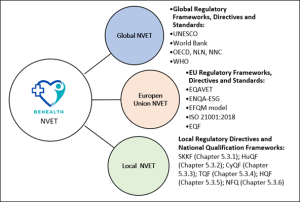
Figure 2 – NWBL Frameworks, Directives and Standards Structured According to the Different Institutions at the Global, European Union, and National Levels 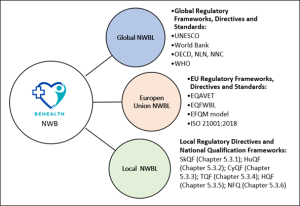
In the coming project stage we will focus on identifying possible gaps in the existing training quality assurance systems (necessary dimensions needed for good professional performance which may not be a part of the existing quality assurance systems). We are also planning a joint meeting of all participants in Cyprus at the end of May. For more information about the project, please be so kind and have a look at the materials on the project website (insert correct URL). These are regularly updated as the project progresses.
It would make us very happy, if you decide to stay in contact with us providing us with your expert ideas about improvement of evaluation frameworks and improvement of existing quality assurance practices targeted at the provision of high quality nursing education. We will more than gladly incorporate your suggestions into the tools this project aims to produce and put into everyday use.